Biological Sciences
Science & Culture
Health Sciences
The Gut Feeling: How Serotonin’s True Origin Is Reshaping Our Understanding of Depression
Reese Kugel '29
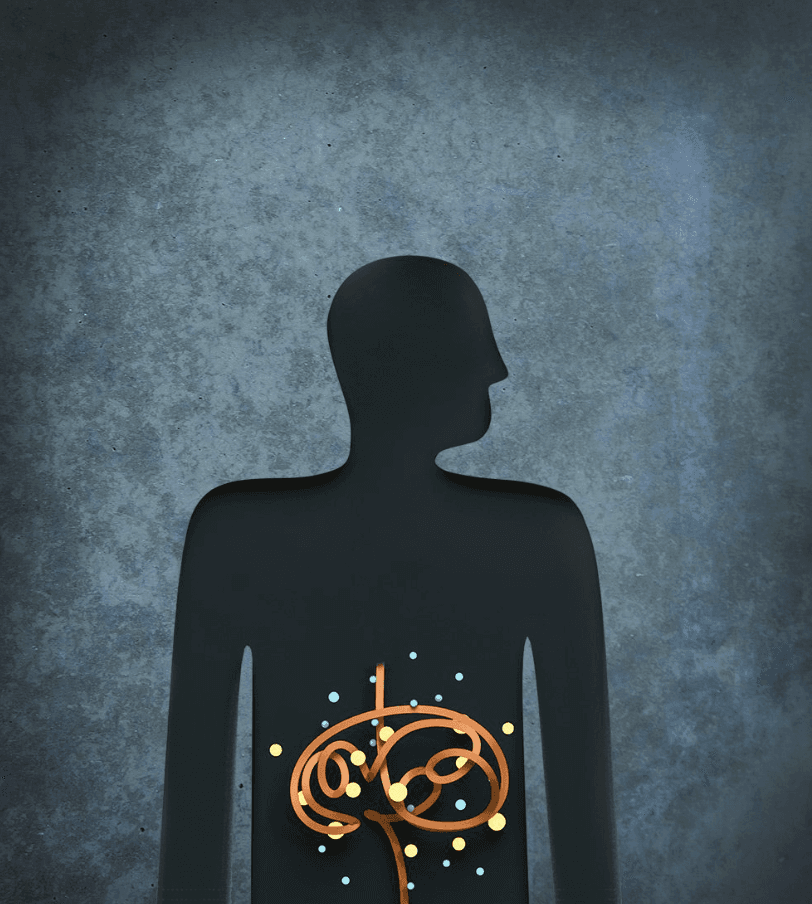
Currently, depression affects an estimated 280 million people worldwide, making it one of the most common mental health disorders globally (World Health Organization, 2023). For decades, the dominant explanation was simple: depression is a brain disorder, caused by a deficiency of the neurotransmitter serotonin. This consensus led to the development of selective serotonin reuptake inhibitors (SSRIs), which work by preventing the brain from clearing serotonin too quickly, leaving more serotonin available at the neuronal synapse. For many patients, they help, but for roughly one in three, they don't work well enough. Interestingly, the reason may lie in a biological fact that medicine has long underappreciated: approximately 90 to 95 percent of the body's serotonin is not made in the brain; it is made in the gut (Mawe and Hoffman, 2013). Now, scientists are reconsidering the origin of depression and, with that, the future of antidepressant therapy.
Serotonin, chemically known as 5-hydroxytryptamine (5-HT), is a monoamine neurotransmitter most commonly associated with feelings of well-being and emotional stability. It is synthesized by specialized cells lining the gastrointestinal tract, called enterochromaffin (EC) cells. These cells produce serotonin by converting dietary tryptophan, an essential amino acid found in foods like eggs, nuts, and legumes, through a pathway catalyzed by the enzyme tryptophan hydroxylase 1 (TPH1) (Cohut, 2024). EC cells serve as a communication circuit between the apical and basolateral interfaces of the gut epithelium, sensing chemical and mechanical stimuli and transducing signals to both the peripheral and central nervous systems (Dodds et al.). The overall activity of EC cells is regulated by the gut microbiome, a vast community of bacteria, fungi, and other microorganisms that inhabit the digestive tract. Additionally, specific bacterial species within the gut microbiome have been found to influence serotonin production; for example, Bifidobacterium breve, Bifidobacterium longum, and Pediococcus acidilactici have been found to enhance the production of 5-hydroxytryptophan and serotonin in the intestine (Noh et al.). The microbiome, in this sense, sits upstream of the EC cells, helping to determine how much serotonin the gut produces in the first place.
Since gut-derived serotonin cannot cross the blood-brain barrier and enter the brain directly, it influences mental states via the vagus nerve, the longest cranial nerve in the body, which runs from the brainstem down through the chest and into the abdomen. Crucially, about 80 percent of its fibers are afferent, meaning they carry signals from organs to the brain (Bergland). When EC cells release serotonin into the intestinal lining, it activates nearby sensory neurons, which relay signals through this vagal pathway to the nucleus tractus solitarius in the brainstem. From there, it modulates serotonergic neurons in the dorsal raphe nucleus and norepinephrinergic neurons in the locus coeruleus, regions with well-established roles in emotional regulation and stress response (Dodds et al., 2022).
The understanding that the gut is directly tied to serotonin production and can influence mood symptoms has serious consequences for how antidepressants are evaluated, and where they fall short. Because SSRIs act on serotonin transporters throughout the entire body, not only in the brain, they inevitably interfere with the gut's own serotonin regulation. To that end, the most common adverse drug reactions to SSRIs involve the digestive system, which contributes directly to low patient compliance with taking the medication (Cascade et al., 2009). Beyond tolerability, there are well-documented efficacy problems, including anxiety induction at treatment onset, delayed therapeutic effect, sexual dysfunction, sleep disturbance, and an inability to effectively treat depressed mood symptoms and cognitive impairment (Wang et al., 2018). Therefore, it has been hypothesized that a treatment approach that primarily acts in the gut could address many of these concerns. Moreover, a gut-centered approach could change how depression is diagnosed and monitored. Currently, depression is usually evaluated through reported symptoms such as sadness, sleep changes, appetite changes, loss of interest, fatigue, and difficulty concentrating. These symptoms are important, but they do not reveal much about the biological source of the illness in a particular patient. In the future, doctors may be able to examine gut-related factors, such as microbiome composition, inflammation, tryptophan metabolism, and vagal nerve activity, to better understand which treatment is most appropriate. A patient with significant gastrointestinal symptoms or microbial imbalance, for example, might benefit from a treatment plan that includes dietary changes or gut-targeted medication alongside traditional therapy.
Recently, researchers at Columbia University Irving Medical Center found that boosting serotonin in the intestinal epithelial cells lining the gut reduced anxious and depressive-like behaviors without causing the cognitive or gastrointestinal side effects associated with conventional antidepressants (Hung et al., 2024). It was a significant finding as it proved that mood can be improved by acting on the gut's serotonin system without ever touching the brain's. As a result, a growing body of clinical research has explored manipulating the microbiome directly through the use of psychobiotics, which are probiotics selected specifically for their capacity to influence mental health within the gut-brain axis. A recent systematic review of 51 randomized clinical trials involving 3,353 patients found notably high effectiveness of psychobiotics specifically in treating depression symptoms over treatment periods ranging from 4 to 24 weeks (Mosquera et al., 2024). Further research shows that these psychobiotics may work by increasing tryptophan and other brain-related compound production, leading to higher levels of serotonin precursors, such as 5-hydroxytryptophan, in the body (Mosquera et al., 2024). Although these findings are promising, outcomes vary with the bacterial strains used, the doses, the treatment duration, and the individual patient's baseline microbiome. Thus, further exploration is needed, and researchers are candid that the field, despite its promise, remains in its early stages.
Taken together, these findings point toward a conclusion that is both scientifically significant and, in hindsight, perhaps overdue. The serotonin hypothesis of depression, the idea that the disorder is rooted in a brain chemical imbalance, was always more useful as clinical shorthand than as a complete biological account. This concept is now being replaced by the understanding that depression reflects disruptions across a distributed system that includes the brain but is not confined to it. To that end, evidence increasingly suggests that EC cells, the vagus nerve, and the gut microbiome all actively participate in mood regulation. Whether that understanding eventually yields better treatments remains an open question, but one that is more important than ever to explore.
Edited by Taanvi Gowdar '28
Works Cited
Al-Harbi, Khalid S. "Treatment-Resistant Depression: Therapeutic Trends, Challenges, and Future Directions." Patient Preference and Adherence, vol. 6, 2012.
Bergland, Christopher. "How Does the Vagus Nerve Convey Gut Instincts to the Brain?" Psychology Today, 23 May 2014, www.psychologytoday.com/us/blog/the-athletes-way/201405/how-does-the-vagus-nerve-convey-gut-instincts-to-the-brain.
Breit, Sigrid, et al. "Vagus Nerve as Modulator of the Brain-Gut Axis in Psychiatric and Inflammatory Disorders." Frontiers in Psychiatry, vol. 9, 2018.
Cascade, Eliot, et al. "Real-World Data on SSRI Antidepressant Side Effects." Psychiatry, vol. 6, no. 2, 2009.
Cohut, Maria. "Dopamine vs. Serotonin: Similarities, Differences, and Relationship." Medical News Today, 21 Feb. 2024, www.medicalnewstoday.com/articles/326090.
Dodds, Kelsi N., et al. "The Gut-Brain Axis: Spatial Relationship between Spinal Afferent Nerves and 5-HT-Containing Enterochromaffin Cells in Mucosa of Mouse Colon." American Journal of Physiology–Gastrointestinal and Liver Physiology, vol. 322, no. 5, 2022.
Hung, Lin Y., et al. "Intestinal Epithelial Serotonin as a Novel Target for Treating Disorders of Gut-Brain Interaction and Mood." Gastroenterology, 2024, doi:10.1053/j.gastro.2024.11.012.
Mawe, Gary M., and Jonathan M. Hoffman. "Serotonin Signaling in the Gut—Functions, Dysfunctions and Therapeutic Targets." Nature Reviews Gastroenterology & Hepatology, vol. 10, no. 8, 2013.
Mosquera, Freiser, Eceomo Cruz, et al. "Effectiveness of Psychobiotics in the Treatment of Psychiatric and Cognitive Disorders: A Systematic Review of Randomized Clinical Trials." Nutrients, vol. 16, no. 9, 2024.
Noh, K., et al. "Enterochromaffin Cells–Gut Microbiota Crosstalk: Underpinning the Symptoms, Pathogenesis, and Pharmacotherapy in Disorders of Gut-Brain Interaction." Journal of Neurogastroenterology and Motility, 2022.
Wang, Sheng-Min, et al. "Addressing the Side Effects of Contemporary Antidepressant Drugs: A Comprehensive Review." Psychiatry Investigation, vol. 15, no. 5, 2018.
World Health Organization. "Depressive Disorder (Depression)." WHO, 31 Mar. 2023, www.who.int/news-room/fact-sheets/detail/depression.
Read More
Reese Kugel '29
The Gut Feeling: How Serotonin’s True Origin Is Reshaping Our Understanding of Depression
Research on gut-derived serotonin is reshaping traditional views of depression and antidepressant treatment.

Soham Shah '29
A Perspective on Artificial Intelligence in Healthcare
AI improves diagnostic speed and accuracy, but for treatment it must stay a support tool because of ethical, legal, empathy issues.
Kevin He '29
Universal Base-Edited CAR7 T-Cell Therapy to Treat Relapsed T-cell Acute Lymphoblastic Leukemia (T-ALL)
Base-edited CAR-T therapy offers new hope for relapsed T-ALL by inducing remission and bridging patients to stem cell transplant.